
LOO Industries
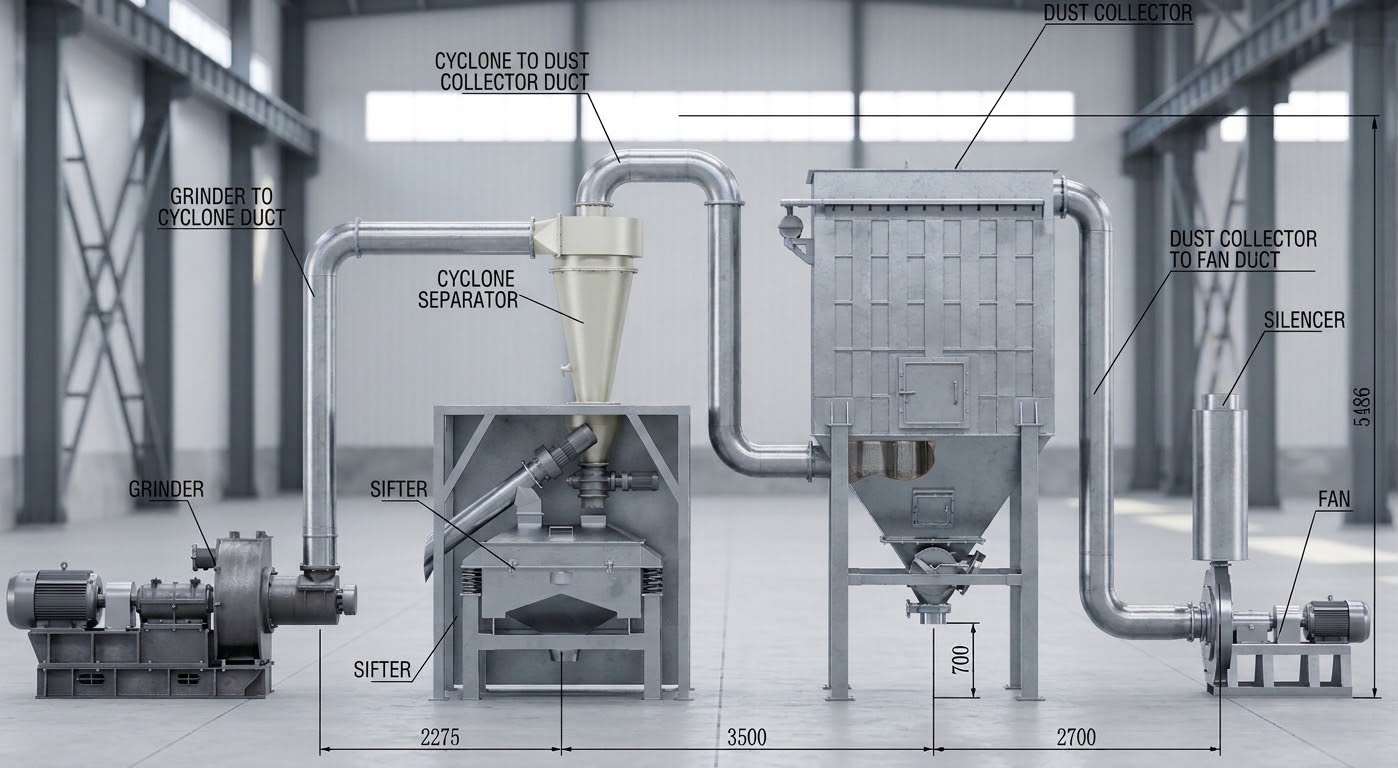
The machine shown in the picture is an Industrial Grinding, Sieving and Dust Collection System. It is designed to grind raw materials into fine powder, separate particles according to size, and collect dust to maintain a clean and safe working environment.
This type of system is commonly used in food processing, pharmaceutical, chemical, agricultural and powder manufacturing industries.
1. Main Parts of the Machine
Nutritional Red Lentils Power Grinder Instant Corn Powder Grinding Production Line Sugar Grinder Machine – Fortified Nutritional Red Lentils Powder Grinder and Food Grade Red Lentils Powder Grinder
There are several important parts in this system:
1. Grinder (Pulverizer)
- The grinder is the first machine in the production line.
- It crushes raw materials into small particles or powder.
- Grinding size depends on the material and machine configuration.
- Examples: spices, grains, chemicals and other dry materials.
2. Cyclone Separator
- The cyclone separates powder particles from the air.
- It works using centrifugal force.
- Heavier powder particles fall down into the collection section.
- Lighter dust continues through the duct system.
3. Sifter (Vibrating Sieve)
- The sifter separates powder according to particle size.
- It uses vibrating screens or mesh.
- Fine powder passes through the screen.
- Oversized particles remain on the screen and can be reprocessed.
4. Dust Collector
- The dust collector removes fine dust from the airflow.
- It usually uses filter bags or filter cartridges.
- It helps reduce air pollution inside the factory.
- It improves workplace cleanliness and safety.
5. Fan (Blower)
- The fan creates negative pressure and airflow throughout the duct system.
- It pulls dust and air from the grinder and transfers them through the collection system.
- It helps maintain continuous operation.
6. Silencer
- The silencer reduces noise generated by the exhaust airflow.
- It helps reduce noise pollution in the factory.
2. How Does the Complete System Work?
DP® IP Impact Pulveriser – DP Pulveriser
The complete working process is:
- Raw materials enter the grinder.
- The grinder crushes the materials into powder.
- Air carries the powder through the grinder-to-cyclone duct.
- The cyclone separator separates heavier powder particles.
- The powder moves to the sifter for particle-size separation.
- Fine dust travels through the duct to the dust collector.
- The dust collector filters the air.
- The fan pulls the filtered air through the exhaust system.
Important: The exact powder discharge and airflow arrangement should be confirmed from the actual machine design. The diagram is a general representation.
3. Main Advantages
- High production efficiency.
- Better powder quality and particle-size control.
- Reduced dust inside the factory.
- Improved working environment.
- Less material loss.
- Suitable for continuous industrial production.
4. Important Technical Information
Before operating or purchasing this system, you should know:
| Technical parameter | Description |
|---|---|
| Grinding capacity | kg/hour |
| Motor power | kW or HP |
| Grinding fineness | Mesh size |
| Sifter capacity | kg/hour |
| Cyclone efficiency | Dust separation efficiency |
| Dust collector | Filter area and type |
| Fan capacity | m³/hour |
| Operating voltage | V |
| Material of construction | SS304, SS316 or MS |
5. Further Technical Information
Engineering and technical topics for this machine include:
- Machine working principle in detail.
- Complete airflow and powder flow diagram.
- Function of every duct and pipe.
- Motor power and fan capacity calculation.
- Installation and maintenance procedures.
- Machine operation and troubleshooting.
What type of material do you want to process?
For example: rice, wheat, spices, turmeric, chilli, chemicals or other powder materials.